
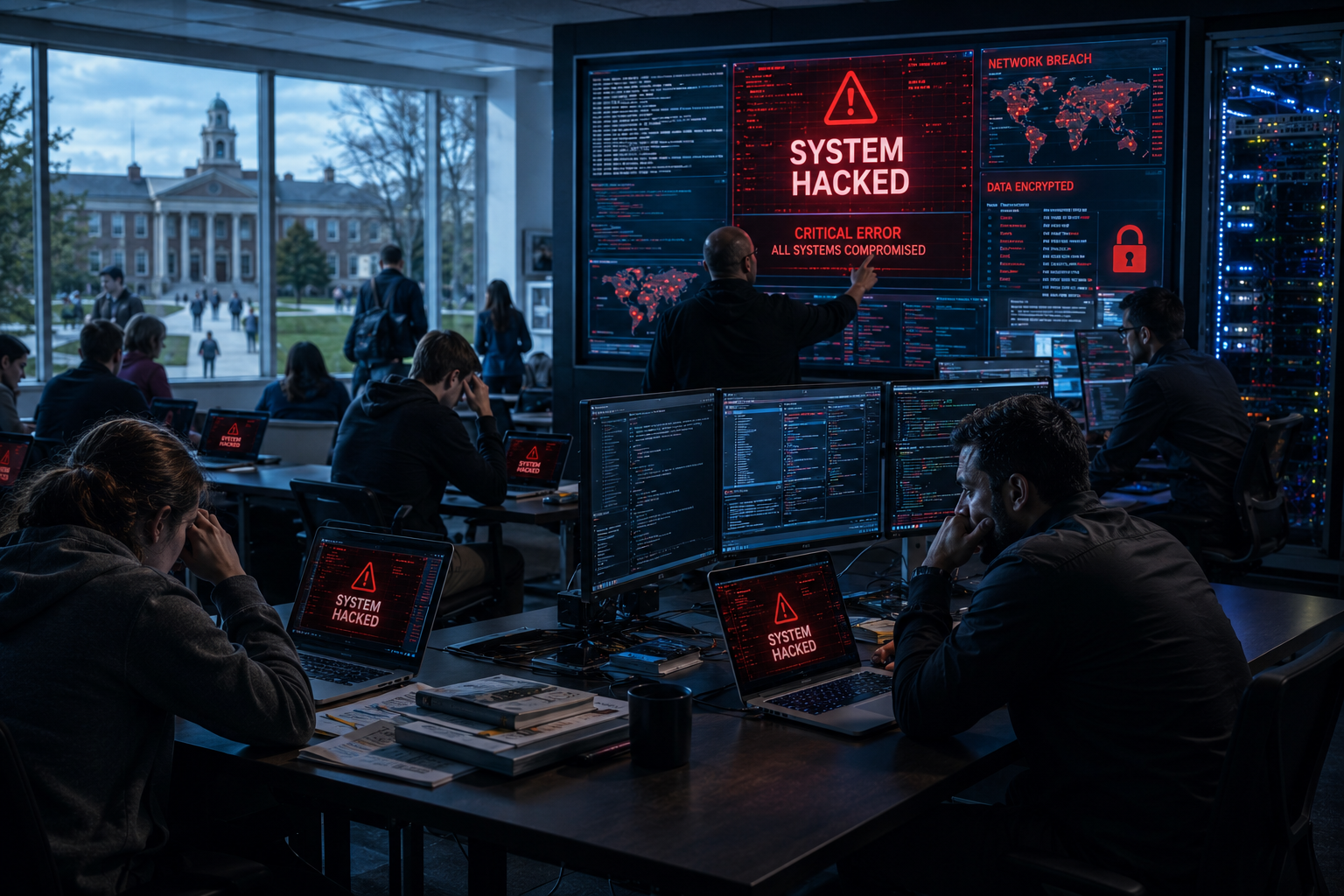
The growing cyber attack schools crisis has disrupted universities and schools across multiple countries, creating serious concerns about digital security in the education sector.
According to reports, the international cyber attack affected important technology systems used by educational institutions, causing widespread operational problems and forcing many schools and universities to respond quickly.
The cyber attack schools incident highlights how dependent modern education has become on digital infrastructure. From online learning systems to student databases and communication platforms, schools now rely heavily on connected technology every day.
As cyber threats continue evolving, educational institutions are becoming increasingly vulnerable targets for large-scale attacks.
The latest disruption serves as another warning about the growing risks facing schools and universities worldwide.
Cyber Attack Schools Incident Disrupted Key Education Systems
The recent cyber attack schools incident reportedly affected a broad range of educational institutions, creating major technology outages and operational disruptions.
Many schools and universities depend on centralized digital systems for daily activities including:
- Student records
- Online learning platforms
- Internal communication
- Email services
- Administrative tools
- Classroom management systems
When these systems experience cyber disruption, the impact can spread quickly across entire institutions.
The cyber attack schools crisis demonstrated how deeply integrated digital infrastructure has become within modern education environments.
For many institutions, even short outages can interrupt teaching, communication, and student services significantly.
Universities Face Growing Cybersecurity Risks
The cyber attack schools situation also reflects a broader cybersecurity challenge facing universities worldwide.
Higher education institutions often manage enormous amounts of sensitive information, including:
- Student data
- Financial records
- Research information
- Employee details
- Academic systems
This makes universities attractive targets for cybercriminals.
At the same time, universities typically operate highly open digital environments designed to support collaboration and research access. That openness can sometimes create additional security challenges.
The latest cyber attack schools incident once again shows why cybersecurity protection is becoming essential for education systems.
Remote Learning Increased Digital Dependence
One major factor behind rising cyber risk is the rapid growth of digital learning systems.
During recent years, schools and universities expanded online education infrastructure significantly. Students and staff now rely on digital platforms more than ever before.
That growing dependence means cyber incidents can now disrupt education much faster.
The cyber attack schools crisis exposed how vulnerable some institutions may still be to large-scale technology threats.
Attackers Often Target Weak Systems
Cybersecurity experts frequently warn that older or poorly protected systems can become easy targets.
Educational institutions sometimes struggle to update technology infrastructure quickly because of budget limitations and large network complexity.
The latest cyber attack schools disruption may increase pressure for stronger investment in cybersecurity defenses across education sectors.
Students and Teachers Felt the Immediate Impact
The effects of the cyber attack schools incident were felt immediately by students, teachers, and administrators.
Many institutions reportedly experienced difficulties accessing important systems needed for normal operations.
These disruptions can create serious problems for:
- Assignment submissions
- Exam schedules
- Communication
- Attendance systems
- Learning resources
For students preparing for exams or major coursework deadlines, technology outages can become extremely stressful.
Teachers and staff also face additional pressure during cyber incidents because they must quickly adapt to system failures and communication challenges.
Cyber Attack Schools Crisis Highlights Global Problem
The latest cyber attack schools event is not an isolated situation.
Cybersecurity attacks targeting schools and universities have increased globally in recent years. Experts believe educational institutions are becoming more frequent targets because they often store valuable information while operating large digital networks.
The growing number of cyber incidents has raised concern among governments and security specialists worldwide.
Educational organizations now face pressure to strengthen:
- Data protection
- Network security
- Staff training
- Backup systems
- Incident response plans
The cyber attack schools disruption serves as another example of how serious these threats have become.
Why Educational Institutions Are Vulnerable
Several factors make schools and universities vulnerable to cyber attacks.
Large education systems often manage thousands of devices connected to shared networks. Students, teachers, researchers, and administrators all require access to online systems daily.
This creates complex digital environments that can be difficult to secure fully.
The cyber attack schools crisis also highlights another challenge: many institutions must balance accessibility with security.
Open access supports learning and research collaboration, but it can also create more opportunities for attackers.
Governments and Experts Are Increasingly Concerned
Cybersecurity threats involving education systems are becoming a major concern for governments and technology experts.
The latest cyber attack schools incident may increase calls for stronger national cybersecurity protections for educational institutions.
Experts often recommend improvements such as:
- Better encryption
- Faster software updates
- Multi-factor authentication
- Employee cybersecurity training
- Advanced threat monitoring
Many specialists believe cybersecurity awareness must become part of everyday operational planning within schools and universities.
Cybersecurity Training Is Becoming More Important
The cyber attack schools disruption also highlights the importance of cybersecurity education itself.
Many cyber incidents begin with human error, including phishing emails, weak passwords, or accidental system exposure.
As a result, schools and universities increasingly train staff and students to recognize potential cyber threats.
Important cybersecurity habits include:
- Using strong passwords
- Avoiding suspicious links
- Updating software regularly
- Reporting unusual activity
- Protecting personal data
Improved awareness can reduce the risk of successful attacks significantly.
Digital Education Continues Expanding Despite Risks
Even with rising cyber threats, digital education continues growing rapidly worldwide.
Schools and universities increasingly use technology to improve accessibility, communication, and learning flexibility.
Online systems now support:
- Virtual classrooms
- Remote learning
- Digital exams
- Student collaboration
- Cloud-based education tools
The cyber attack schools crisis shows that stronger cybersecurity protections must grow alongside these digital advancements.
Technology remains essential for modern education, but security protections must continue improving as systems become more connected.
Schools and Universities Are Reviewing Security Systems
Following the latest cyber attack schools disruption, many educational institutions may begin reviewing their existing cybersecurity protections.
Administrators often evaluate:
- Backup systems
- Emergency response plans
- Software vulnerabilities
- Network monitoring
- Data protection strategies
Cybersecurity planning is becoming increasingly important because educational disruptions can affect thousands of students and staff simultaneously.
The pressure to improve digital defenses will likely continue growing after this incident.
Why the Cyber Attack Schools Crisis Matters Globally
The importance of the cyber attack schools crisis extends beyond individual institutions.
Education systems play a critical role in society. When schools and universities experience major disruptions, students, teachers, families, and communities can all feel the effects.
The incident also demonstrates how cybersecurity has become a global issue affecting nearly every sector.
As technology dependence increases worldwide, protecting digital infrastructure becomes increasingly important for public stability and daily life.
Final Thoughts
The latest cyber attack schools disruption serves as a powerful reminder of the growing cybersecurity risks facing educational institutions worldwide. Schools and universities now depend heavily on digital systems for learning, communication, and administration, making strong cybersecurity protections more important than ever.
As cyber threats continue evolving, educational institutions will likely face increasing pressure to strengthen defenses, improve staff training, and modernize digital infrastructure.
The recent cyber attack schools incident shows that cybersecurity is no longer only a technology issue, it has become a major challenge directly affecting students, teachers, and the future of education itself.
For schools and universities around the world, digital security may now be just as important as physical campus safety.
Read Other Interesting news here: Gran Turismo 7
