
The technology sector has a clear leader, and its influence is felt in every data center across the globe. For the past few years, we have witnessed the rise of a titan. Nvidia AI dominance is not just a passing trend or a bit of luck; it is a calculated takeover of the most important infrastructure of our century. While many experts predicted that the competition would close the gap by now, the reality in 2026 is that the green team is moving faster than ever.
In this deep dive, we explore how Nvidia transformed from a gaming company into the heartbeat of global intelligence. By looking at their hardware, software, and visionary leadership, we can see why Nvidia AI dominance remains the most important story in tech today. Let’s look at the five pillars keeping them at the top.
1. The Engineering Marvel of the Blackwell Chip
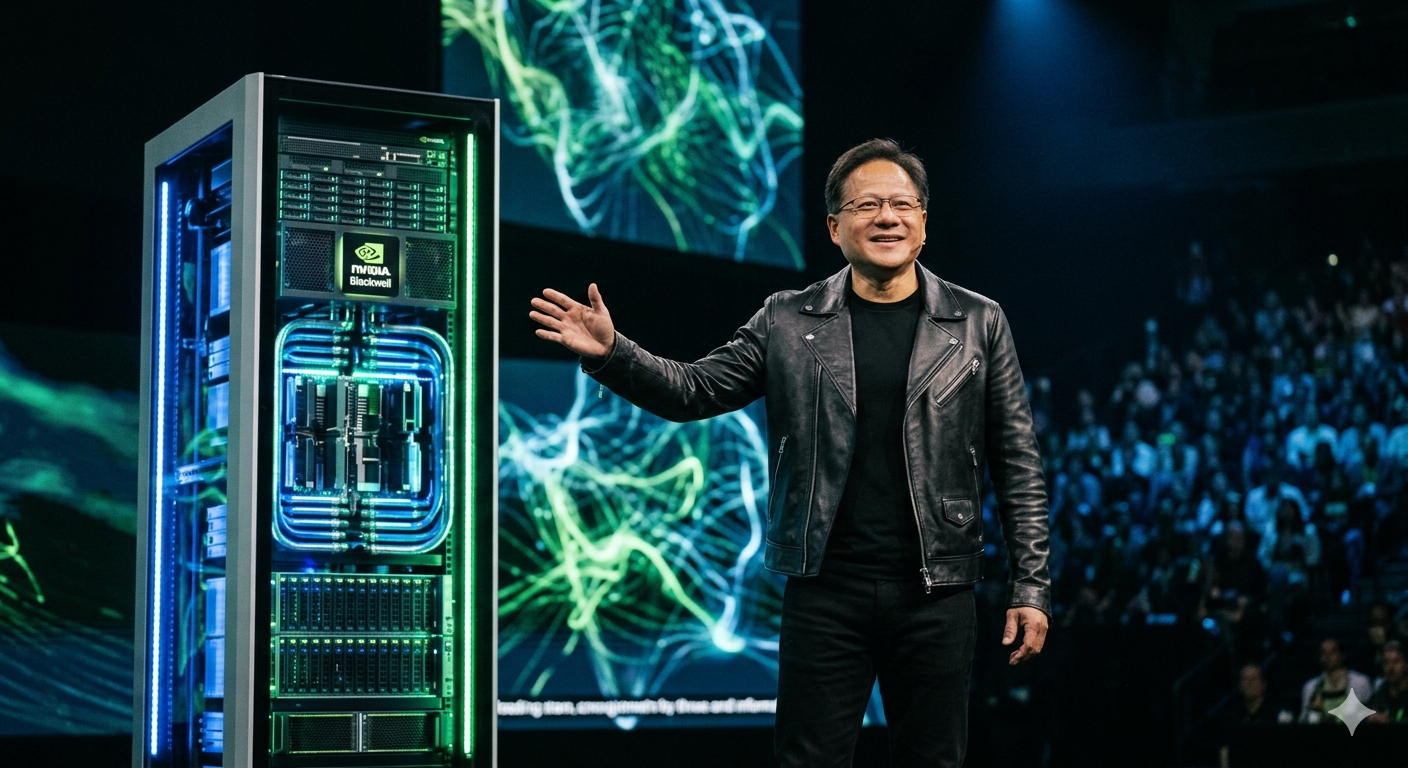
While other companies are still trying to match the performance of older models, Nvidia has pushed the boundaries with its Blackwell architecture. This isn’t just a minor update to a graphics card. It is a fundamental shift in how we process information. The Blackwell chips are the primary engine fueling the current state of Nvidia AI dominance.
Efficiency Meets Raw Power
The biggest challenge for modern AI is the sheer amount of electricity required. These chips solve that problem by providing massive performance gains while significantly reducing power consumption. For a company like Microsoft or Google, saving a few percentage points on electricity across thousands of servers adds up to billions of dollars.
Smarter Data Handling
- Blackwell uses advanced memory tech to move data faster than ever before.
- It allows for the training of “Trillion Parameter” models that were previously impossible.
- This hardware advantage ensures that Nvidia AI dominance isn’t just a marketing slogan, but a physical reality.
2. Why CUDA Is the Ultimate Software Moat
If you ask an AI engineer why they don’t switch to a cheaper chip, they will likely give you a one-word answer: CUDA. This software platform is the secret weapon behind Nvidia AI dominance. It is the environment where almost all modern artificial intelligence is built, and it has become the industry standard over the last two decades.
3. Moving from Individual Chips to “AI Factories”
Jensen Huang no longer talks about selling a single processor. Instead, he talks about the “AI Factory.” This strategic shift has solidified Nvidia AI dominance by turning the company into a full-system provider. They now design the chips, the networking cables, the cooling systems, and the software that ties it all together.
The Power of the Full Stack
When a customer buys from Nvidia, they aren’t just getting hardware; they are getting a pre-optimized system. This “plug-and-play” approach for giant data centers makes it nearly impossible for a small startup to compete. To beat them, a rival would have to build an entire ecosystem, not just a faster chip.
4. Financial Strength and the R&D Flywheel
The financial numbers behind Nvidia are record-breaking. Because their technology is in such high demand, they enjoy profit margins that are the envy of the silicon world. This wealth feeds back into the company, further accelerating Nvidia AI dominance through massive research spending.
Outpacing the Competition’s Budget
- Nvidia spends more on AI research and development than most of its rivals combined.
- They are currently on a “one-year rhythm,” releasing a brand-new architecture every 12 months.
- By the time a competitor copies their current tech, Nvidia has already moved to the next generation.
5. The Relentless Vision of Jensen Huang
Every successful empire needs a visionary at the helm. For Nvidia, that is Jensen Huang. His ability to see the “AI wave” a decade before it arrived is the reason we are discussing Nvidia AI dominance today. He has built a culture that thrives on speed and a “Day One” mentality.
Speed as a Weapon
In the tech world, being slow is a death sentence. Huang has organized his company to be incredibly flat and fast. Decisions that take months at other giant corporations happen in days at Nvidia. This agility allows them to pivot and address new market needs before anyone else even realizes the market has changed.
How Competitors Are Reacting to the Gap
It is important to note that companies like AMD and Intel are not sitting still. They are pouring billions into their own chips to challenge Nvidia AI dominance. However, they face a “chicken and egg” problem. Even if they make a chip that is slightly faster, they don’t have the decades of software development and developer loyalty that Nvidia enjoys.
The Challenge of Migration
Moving a massive AI model from Nvidia hardware to a rival’s system is a nightmare for most engineering teams. The risk of bugs and downtime is often too high. This “lock-in” effect is perhaps the strongest guardrail protecting the company’s market share in 2026.
Final Thoughts
When we look at the current landscape, Nvidia AI dominance appears to be one of the most secure positions in tech history. By mastering the hardware, the software, and the systems that run them, they have created a perfect storm of innovation.
As we move further into the decade, the demand for “compute” will only grow. Nvidia has positioned itself as the sole utility provider for this new digital gold. If you want to understand the future of the global economy, you must understand the strength of the green giant. As long as Jensen Huang keeps his foot on the gas, the era of Nvidia AI dominance is far from over.
Read Other Interesting news here: D-Wave Earnings
