
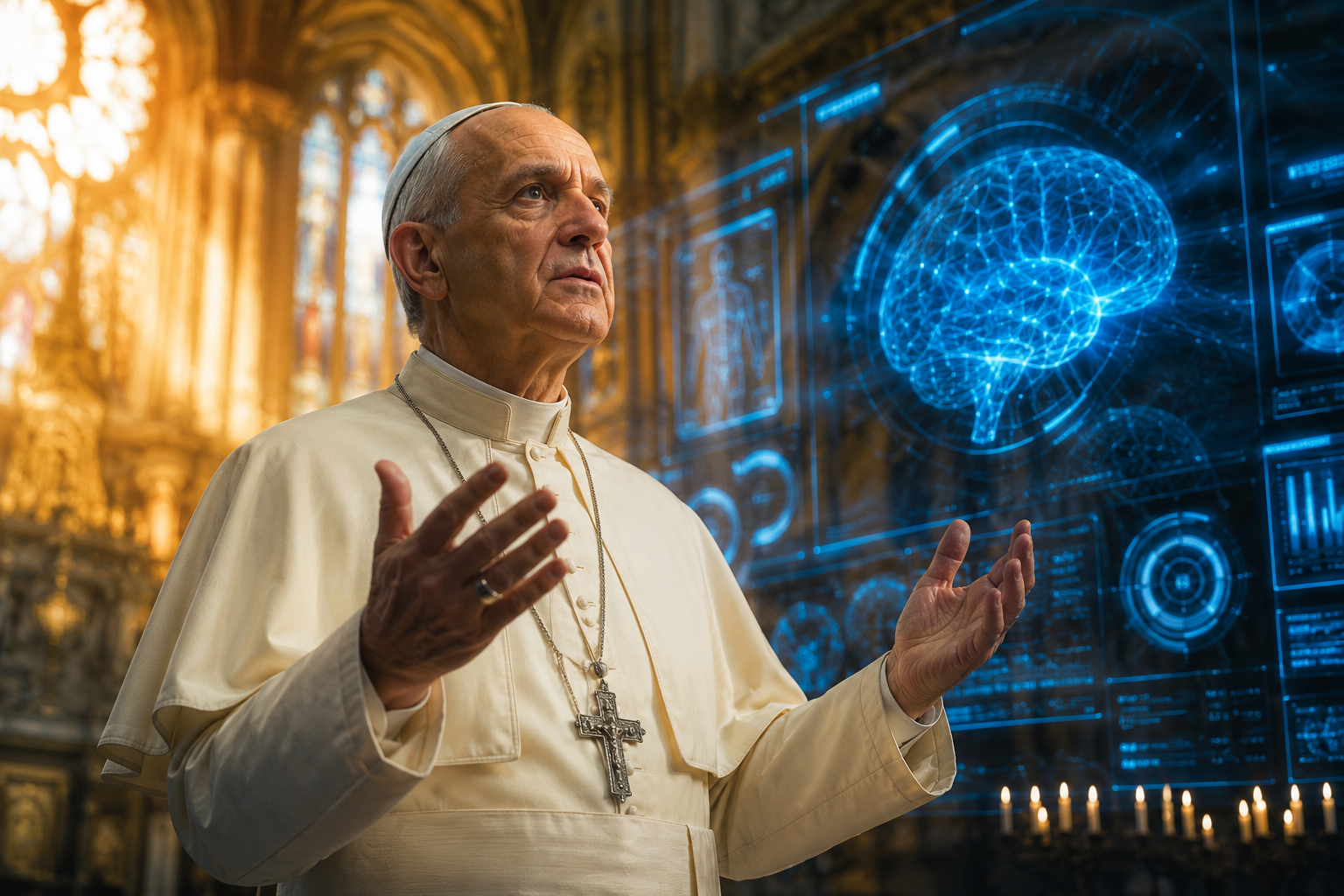
Pope Leo AI concerns are now becoming part of one of the world’s biggest conversations about technology, ethics, and human responsibility. In his first major teaching focused on artificial intelligence, Pope Leo warned that AI must be “disarmed” before it creates serious harm for humanity.
His message immediately captured global attention because it connected spiritual leadership with the fast-growing power of artificial intelligence. As AI systems continue spreading across healthcare, education, business, media, and military technology, more leaders are raising questions about safety and ethics.
Pope Leo’s remarks showed that concerns about AI are no longer limited to scientists or technology companies. Religious leaders, governments, and ordinary people are all starting to ask the same difficult question: how can society control powerful technology without losing its humanity?
Pope Leo Places Human Dignity at the Center: Pope Leo AI
During his teaching, Pope Leo reportedly emphasized that technology should always serve humanity instead of controlling it.
The Pope warned that society must never allow machines or automated systems to weaken human dignity, moral responsibility, or compassion.
His message focused heavily on protecting people from technological systems that may become harmful when used without ethical limits.
AI Must Remain Under Human Control: Pope Leo AI
One of the clearest themes from the Pope’s remarks involved human oversight.
He suggested that artificial intelligence should never operate without strong ethical guidance and accountability.
That concern reflects a growing global debate surrounding:
- Autonomous weapons
- AI surveillance
- Deepfake technology
- Algorithmic bias
- Data privacy
- Automated decision-making
Many world leaders and technology experts have raised similar warnings in recent years.
Moral Responsibility Cannot Be Replaced
The Pope also stressed that moral judgment belongs to humans, not machines.
Even highly advanced systems cannot replace:
- Human empathy
- Ethical reasoning
- Compassion
- Spiritual understanding
- Personal accountability
This idea became one of the strongest emotional points in his teaching.
Why the Pope Used the Word “Disarmed”
The word “disarmed” immediately stood out in headlines worldwide.
It suggested that Pope Leo sees certain AI developments as potentially dangerous if left unchecked.
Concerns About AI in Warfare
One major fear surrounding AI involves military technology.
Governments around the world are increasingly investing in AI-driven defense systems, including autonomous weapons and surveillance tools.
Critics worry these systems could eventually make life-and-death decisions without direct human involvement.
Pope Leo’s warning appears connected to these growing concerns.
Technology Can Be Used for Harm
The Pope reportedly acknowledged that artificial intelligence itself is not automatically evil.
Instead, the danger depends on how humans choose to use it.
That distinction is important because AI already supports many positive fields such as:
- Medical research
- Accessibility tools
- Disaster prediction
- Education systems
- Scientific analysis
However, without ethical safeguards, the same technology can also create serious risks.
The Catholic Church Is Increasingly Discussing AI: Pope Leo AI
Pope Leo’s teaching reflects a broader effort by the Catholic Church to address emerging technologies more directly.
Religious leaders worldwide are paying closer attention to how AI could reshape society.
Faith Leaders Are Entering Technology Debates
For many years, discussions about artificial intelligence mainly involved:
- Technology companies
- Scientists
- Governments
- Academic researchers
Now, religious organizations are increasingly participating in these conversations as well.
Faith leaders often focus on questions involving:
- Human identity
- Moral responsibility
- Social justice
- Human dignity
- Ethical boundaries
Those concerns overlap strongly with many modern AI debates.
Technology Raises Deep Ethical Questions
Artificial intelligence is not only changing business or entertainment.
It also raises difficult philosophical and ethical questions about the future of humanity itself.
For example:
- How much control should machines have?
- Can algorithms replace human judgment?
- Should AI influence warfare?
- How should personal data be protected?
- What happens if AI spreads misinformation?
Pope Leo’s message highlights how serious those concerns have become globally.
AI Development Is Moving Extremely Fast: Pope Leo AI
One reason global concern continues growing is the incredible speed of AI development.
Over the past few years, artificial intelligence tools have expanded rapidly across multiple industries.
AI Is Already Part of Everyday Life
Today, AI influences:
- Smartphones
- Social media feeds
- Search engines
- Customer support systems
- Image generation
- Workplace automation
Many people now interact with AI daily without fully realizing it.
That rapid integration has created both excitement and anxiety.
Governments Are Struggling to Keep Up
Technology often evolves faster than laws and regulations.
As AI systems become more powerful, governments worldwide are trying to create rules involving:
- Privacy
- Safety
- Transparency
- Copyright
- Security
- Ethical use
However, regulation remains highly complicated because AI development is happening globally and extremely quickly.
The Debate Around AI Safety Continues Growing: Pope Leo AI
Pope Leo’s comments arrive during a period of intense debate about AI safety.
Some experts believe artificial intelligence could dramatically improve human life.
Others worry society is moving too fast without fully understanding the long-term risks.
Supporters See Huge Opportunities
AI supporters point to several positive possibilities, including:
- Faster medical discoveries
- Improved productivity
- Better accessibility tools
- More efficient research
- Personalized education
Many industries already rely heavily on AI systems to improve efficiency and innovation.
Critics Fear Unintended Consequences
At the same time, critics warn about problems such as:
- Job displacement
- Misinformation
- Surveillance expansion
- Deepfake abuse
- Cybersecurity threats
- Loss of human oversight
Pope Leo’s warning adds moral and spiritual weight to those concerns.
Human Values May Become the Biggest Challenge: Pope Leo AI
The Pope’s teaching ultimately focused less on technology itself and more on human responsibility.
Artificial intelligence reflects the intentions of the people building and controlling it.
Ethics Could Shape the Future of AI
The future impact of AI may depend largely on whether societies prioritize:
- Human rights
- Transparency
- Accountability
- Compassion
- Ethical safeguards
Without those protections, advanced technology could create serious inequality or harm.
Humanity Must Remain the Priority
Pope Leo repeatedly emphasized that technological progress should never come at the cost of human dignity.
That message resonates strongly during a time when AI is becoming increasingly powerful across the world.
The challenge now is ensuring innovation benefits humanity rather than weakening it.
The World Is Listening Closely: Pope Leo AI
Because the Pope represents one of the world’s most influential religious voices, his comments are likely to shape future global discussions about AI ethics.
Leaders in technology, politics, education, and religion are all increasingly recognizing that artificial intelligence may become one of the defining issues of the modern era.
The Pope’s warning may encourage broader conversations about how societies should responsibly guide technological progress moving forward.
Final Thoughts
The powerful Pope Leo AI warning has added a major moral voice to the growing global debate surrounding artificial intelligence.
By calling for AI to be “disarmed,” the Pope highlighted serious concerns about ethics, human dignity, military use, and the risks of allowing technology to operate without proper safeguards. His message focused not on rejecting innovation completely, but on ensuring humanity remains in control of its future.
As AI continues evolving rapidly across every part of society, discussions about responsibility and ethical limits will likely become even more important in the years ahead.
Pope Leo’s first major teaching on artificial intelligence may ultimately be remembered as an important moment in the worldwide conversation about balancing innovation with humanity.
Read Other Interesting news here: Galaxy Watch AC
