
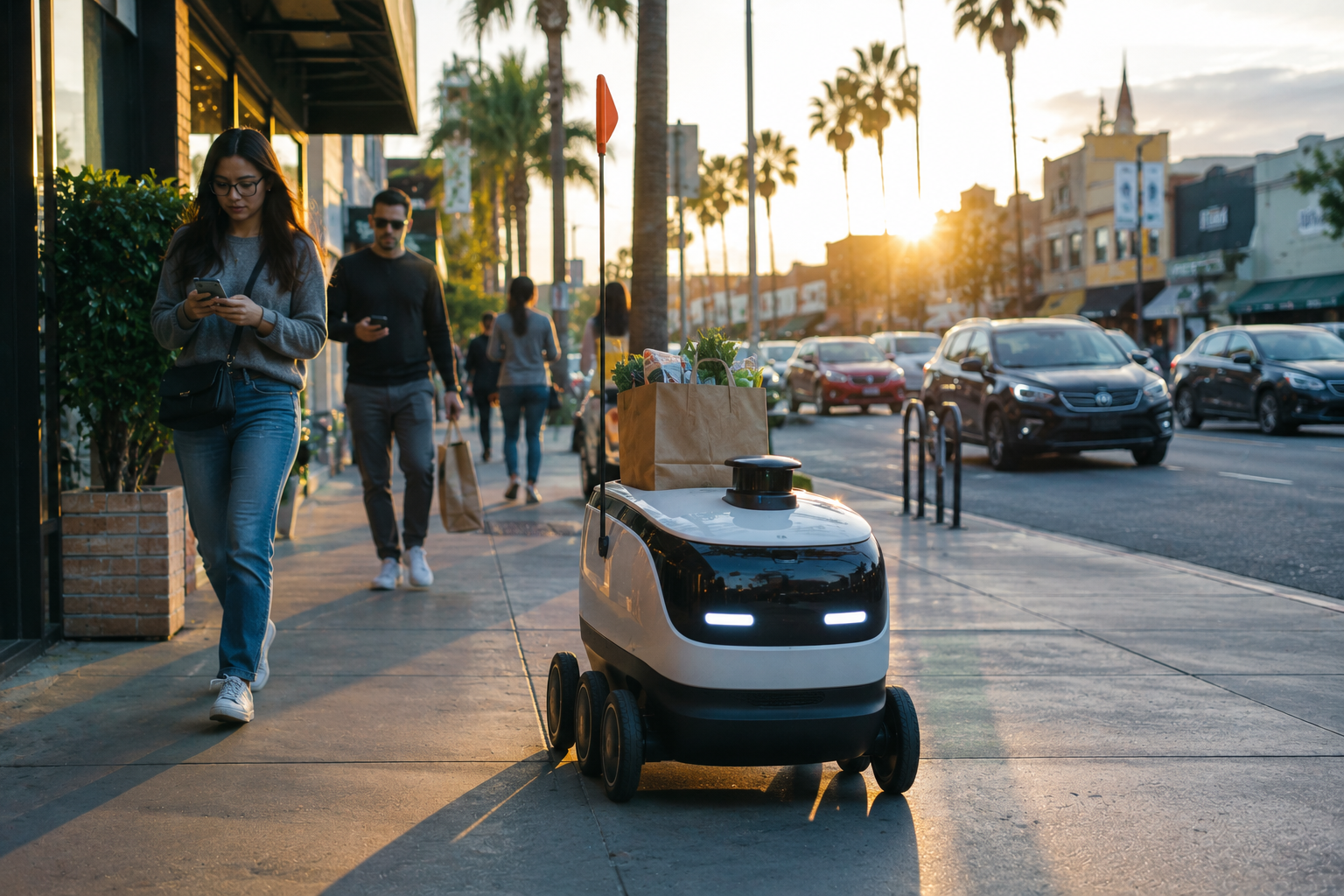
Delivery robots are becoming an increasingly common sight across the streets and sidewalks of Los Angeles, and their growing presence is creating both excitement and concern among residents.
These small autonomous machines quietly move through neighborhoods carrying food, groceries, and packages for customers. Supporters see them as a glimpse into the future of convenience and automation. Critics, however, worry about safety, public space, accessibility, and the long-term impact on workers.
What once looked like science fiction is now becoming part of everyday urban life.
As technology companies continue expanding robot delivery services, Los Angeles has become one of the biggest testing grounds for how cities may function in the future.
Why Delivery Robots Are Expanding So Quickly
Autonomous delivery systems have gained momentum because businesses are constantly searching for faster and cheaper ways to move goods.
Delivery robots promise several advantages for companies, including:
- Reduced labor costs
- Faster short-distance deliveries
- Lower operational expenses
- Continuous operation
- Improved efficiency
As online shopping and food delivery services continue growing, companies see robotic systems as a major long-term investment.
Los Angeles Became a Key Testing Ground
Los Angeles offers ideal conditions for delivery robot companies because of its:
- Large population
- Dense neighborhoods
- High delivery demand
- Strong technology investment culture
Many startups and technology firms now use parts of the city to test how robots operate in real-world environments.
The sidewalks of Los Angeles are slowly becoming experimental spaces for the future of urban automation.
Consumers Increasingly Expect Convenience
Modern consumers now expect extremely fast delivery services.
Many people regularly order:
- Groceries
- Restaurant meals
- Household supplies
- Pharmacy items
- Online purchases
Delivery robots aim to meet those expectations while reducing costs for businesses.
Residents Have Mixed Reactions
Although some people find the robots interesting or convenient, others feel frustrated by their growing presence.
The debate surrounding delivery robots has become increasingly emotional in certain neighborhoods.
Some Residents See Innovation
Supporters argue that robotic delivery systems represent technological progress.
They believe the machines may eventually help cities by:
- Reducing traffic
- Lowering emissions
- Improving efficiency
- Supporting local deliveries
Some residents also enjoy seeing futuristic technology operating in daily life.
For many people, the robots symbolize innovation and modern convenience.
Others Feel Sidewalks Are Becoming Crowded
Critics argue that sidewalks should prioritize people, not machines.
Concerns have emerged involving:
- Blocked walkways
- Accessibility issues
- Safety risks
- Navigation problems for disabled residents
- Increased sidewalk congestion
Some residents worry that public spaces are slowly being redesigned around corporate technology instead of community needs.
Accessibility Concerns Are Growing
One of the strongest criticisms involves accessibility for people with disabilities.
Advocates argue that crowded sidewalks already create challenges in many cities.
Adding autonomous robots may worsen those problems.
Wheelchair Users Face Additional Obstacles
Some disability advocates worry that robots may obstruct movement for:
- Wheelchair users
- Elderly pedestrians
- Parents with strollers
- Visually impaired residents
Even small sidewalk disruptions can create serious daily challenges for many people.
This issue has become central to the public debate surrounding robot deliveries.
Public Space Raises Important Questions
The situation also raises broader questions about who controls urban public spaces.
Many critics ask:
- Should companies use sidewalks for commercial robots?
- Who regulates robotic traffic?
- How should cities balance innovation and accessibility?
These concerns are becoming increasingly important as more robots appear in public areas.
Automation Is Changing Urban Life
The rise of delivery robots reflects a much larger shift happening across society.
Automation is increasingly affecting transportation, retail, logistics, and customer service industries.
AI and Robotics Are Expanding Everywhere
Modern automation technologies now influence:
- Warehouses
- Restaurants
- Transportation systems
- Customer support
- Manufacturing
- Retail operations
Delivery robots are simply one visible example of how AI and robotics are entering daily life.
Los Angeles is becoming an early example of how cities may adapt to those changes.
Companies Want Lower Operating Costs
One major reason automation continues expanding is economic pressure.
Businesses constantly search for ways to:
- Reduce labor expenses
- Improve delivery speed
- Increase operational efficiency
- Scale services faster
Autonomous robots offer companies a potential long-term solution for handling high delivery demand without relying entirely on human workers.
Workers Fear Job Losses
The growth of delivery robots has also raised concerns about employment.
Many people worry automation could eventually replace certain delivery and service jobs.
Gig Economy Workers Feel Pressure
Food delivery and courier work currently support many workers across large cities.
Critics fear widespread robot adoption could reduce opportunities for:
- Couriers
- Delivery drivers
- Gig workers
- Entry-level service employees
This concern has become increasingly common as AI and automation technologies continue improving.
Technology Often Changes Labor Markets
Supporters of automation argue that technology historically creates new jobs while changing older industries.
However, critics point out that transitions can still cause economic pain for workers whose jobs become less necessary.
The debate surrounding delivery robots reflects larger global fears about automation and employment.
Safety and Regulation Remain Major Challenges
As more robots enter public spaces, cities must decide how to regulate them.
Right now, many local governments are still figuring out how to manage autonomous delivery systems safely.
Accidents and Malfunctions Are Possible
Even advanced robots can experience:
- Navigation failures
- Technical malfunctions
- Software errors
- Connectivity issues
Because robots operate around pedestrians, safety standards become extremely important.
Cities may eventually require stricter oversight as adoption increases.
Rules Are Still Evolving
Current regulations surrounding delivery robots vary widely between cities and states.
Questions involving:
- Speed limits
- Sidewalk access
- Liability
- Insurance
- Safety compliance
remain unresolved in many places.
Los Angeles may become an important case study for future urban robotics policies.
Delivery Robots Reflect the Future of Smart Cities
Supporters believe autonomous delivery systems could become part of broader “smart city” infrastructure in the future.
This vision includes cities where AI helps manage:
- Transportation
- Deliveries
- Traffic systems
- Public services
- Energy use
Delivery robots represent one small piece of that larger technological transformation.
Urban Technology Is Expanding Rapidly
Cities worldwide are increasingly experimenting with:
- Autonomous vehicles
- AI surveillance systems
- Smart traffic controls
- Digital infrastructure
As technology becomes more integrated into public life, debates about privacy, ethics, accessibility, and regulation will likely grow stronger.
Public Acceptance Will Matter
No matter how advanced technology becomes, public trust remains essential.
Residents are more likely to support innovation if cities and companies address concerns involving:
- Safety
- Accessibility
- Transparency
- Fair regulation
Without public confidence, widespread adoption may face stronger resistance.
Final Thoughts
The rise of delivery robots across Los Angeles shows how quickly automation is reshaping modern city life.
For supporters, these machines represent convenience, innovation, and the future of urban logistics. For critics, they raise serious concerns about accessibility, public space, worker displacement, and safety.
As technology companies continue expanding autonomous systems, cities will face difficult decisions about how to balance innovation with human needs. Los Angeles is now becoming one of the first major examples of that challenge playing out in real time.
Whether delivery robots ultimately improve urban life or create new problems may depend on how carefully cities regulate and manage this rapidly growing technology.
Read Other Interesting news here: ClickUp Layoffs
