
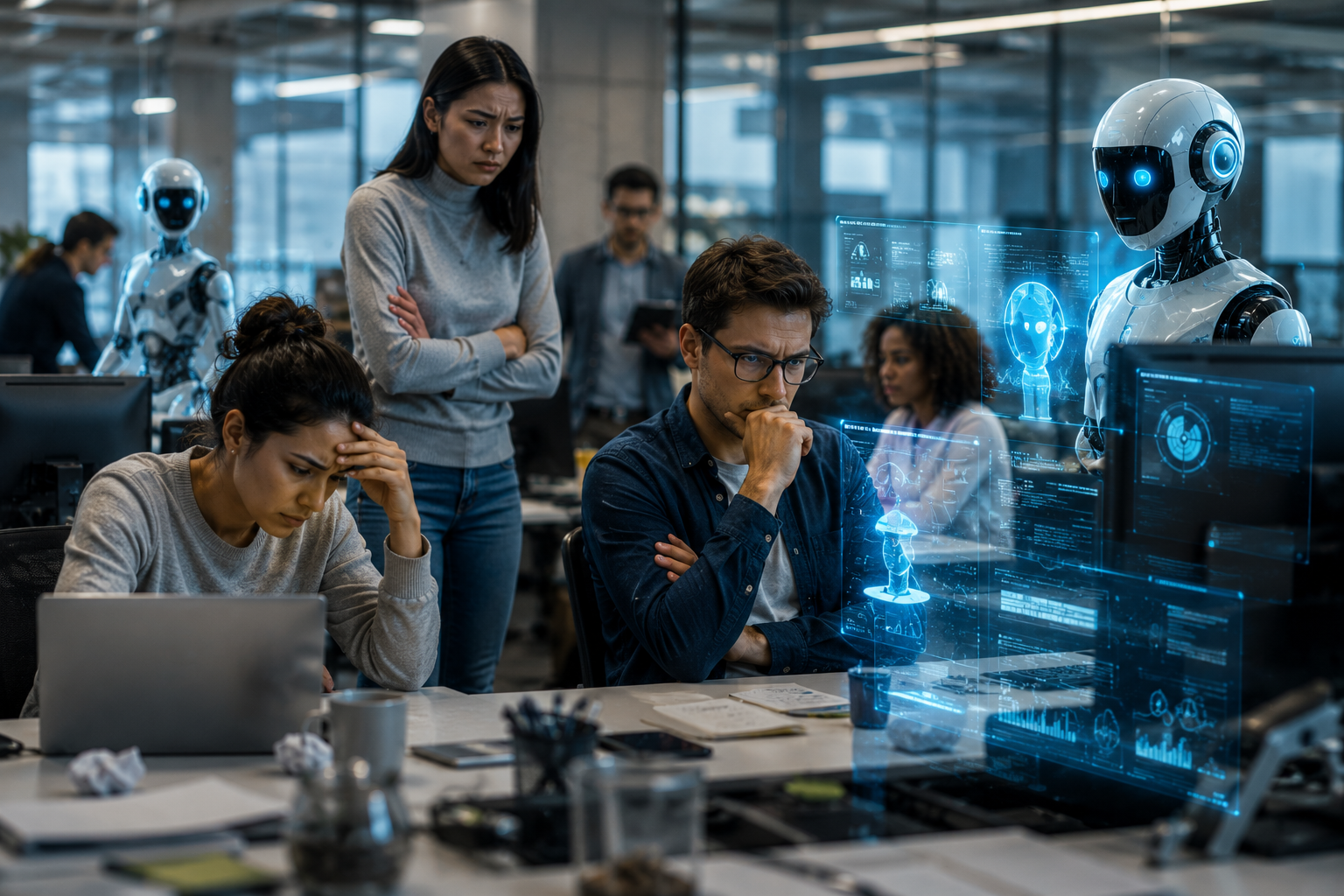
AI workplace bots are becoming more common across offices and businesses, but not everyone is celebrating the change. According to a recent Reuters report, many younger workers are reacting with concern, frustration, and skepticism instead of excitement.
For years, technology companies promoted artificial intelligence as a tool that would improve productivity and reduce repetitive tasks. However, as AI systems move deeper into daily work environments, younger employees are beginning to ask difficult questions about job security, workplace pressure, and the future of human employment.
This growing backlash is creating a new conversation around automation in modern workplaces.
Why AI Workplace Bots Are Expanding So Quickly: AI workplace bots
Companies around the world are investing heavily in artificial intelligence.
Businesses believe AI systems can help improve efficiency, reduce costs, speed up communication, and automate repetitive work. Because of this, AI-powered bots are now appearing across multiple industries.
These tools can assist with:
- Customer service
- Scheduling
- Data analysis
- Writing tasks
- Workplace communication
- Administrative support
For employers, the appeal is obvious. AI promises faster output and lower operational costs.
But workers often see the situation differently.
Younger Workers Are Showing More Resistance: AI workplace bots
According to Reuters, younger employees are not reacting to workplace AI with automatic excitement.
Instead, many are questioning whether these systems may eventually replace human jobs or reduce career opportunities.
This concern is especially strong among workers early in their careers.
Young professionals often depend on entry-level jobs to build skills and gain experience. If automation removes those opportunities, some fear the traditional career path could become harder to access.
Anxiety Around Career Stability Is Growing
The fear is not only about losing jobs immediately.
Many workers worry that AI systems may slowly reduce the need for human employees over time. Even if positions remain available, automation could reshape salaries, responsibilities, and long-term career growth.
This uncertainty is creating anxiety in industries already facing rapid technological change.
For younger workers trying to establish financial stability, the situation can feel especially stressful.
Companies Continue Promoting AI Efficiency: AI workplace bots
Despite growing concerns, businesses continue pushing forward with AI adoption.
Many executives argue that AI tools help employees focus on more meaningful tasks instead of repetitive administrative work.
Supporters of workplace AI often say automation can improve:
- Productivity
- Response times
- Workflow management
- Data processing
- Customer interactions
Some companies also believe AI can reduce employee burnout by handling routine tasks more quickly.
However, critics argue that these promises do not always match real-world workplace experiences.
Workers Fear Losing Human Connection
Another major concern involves workplace culture itself.
Many younger employees worry that AI workplace bots could reduce human interaction inside offices. Tasks that once involved collaboration, communication, or mentorship may increasingly become automated.
This matters because work is not only about completing tasks.
For many people, workplaces also provide:
- Learning opportunities
- Team relationships
- Professional mentorship
- Networking
- Social interaction
If automation removes too much human involvement, some workers fear offices could become less personal and more isolating.
Digital Fatigue Is Becoming More Common
Many workers already spend long hours dealing with screens, apps, notifications, and digital systems.
Adding more AI-driven tools into daily workflows may increase feelings of digital exhaustion.
Some younger employees are beginning to question whether constant automation truly improves quality of life or simply creates new pressures.
This emotional side of the AI debate is becoming harder for companies to ignore.
Entry-Level Jobs Could Change Dramatically
One of the biggest concerns surrounding AI workplace bots is their potential impact on entry-level positions.
Historically, younger workers learned by performing basic tasks early in their careers. Many of those tasks are now becoming easier to automate.
This raises difficult questions.
If AI handles routine work, how will future employees gain practical experience? How will they develop foundational skills needed for more advanced positions later?
Experts continue debating these issues as AI technology expands rapidly.
The Workplace Is Entering a New Era
Artificial intelligence is changing workplaces faster than many people expected.
Only a few years ago, AI tools were still viewed as experimental in many industries. Today, companies are actively integrating AI into hiring, communication, customer service, and productivity systems.
This rapid transformation is forcing employees to adapt quickly.
Some workers feel excited by these changes. Others feel uncertain or overwhelmed.
The mixed reactions show that society is still adjusting to what AI-powered work environments may look like in the future.
Generational Differences Are Becoming More Visible
The Reuters report also highlights a growing generational divide around AI.
Some business leaders see automation as a major opportunity for innovation and profit. Meanwhile, many younger workers focus more heavily on stability, fairness, and career survival.
These different priorities can create tension inside organizations.
Younger employees often want reassurance that AI will support workers instead of replacing them entirely.
Companies that fail to address these concerns may struggle with morale and trust issues.
Trust Is Becoming a Major Workplace Issue
Trust matters deeply during periods of technological change.
If workers believe automation threatens their future, they may become less engaged or more resistant to company decisions.
Businesses therefore face an important challenge: introducing AI tools while still maintaining employee confidence.
Clear communication and transparency may become essential as automation expands further.
AI Is Reshaping Workplace Expectations
The rise of AI is also changing how workers think about careers.
Some employees now believe adaptability and AI literacy will become essential professional skills. Others worry that constant technological disruption could make long-term career planning more difficult.
This uncertainty is reshaping workplace expectations worldwide.
Employees increasingly want answers about:
- Job security
- Skill development
- AI training
- Career growth
- Human oversight
- Ethical automation
Companies may need stronger workforce strategies to manage these concerns effectively.
Businesses Face a Delicate Balance
The challenge for employers is not simple.
Ignoring AI could make companies less competitive. But moving too aggressively with automation may create employee resistance and public criticism.
Organizations now need to balance:
- Innovation
- Efficiency
- Employee trust
- Workplace culture
- Ethical responsibility
How businesses handle this balance could shape the future of modern work.
AI Debate Is No Longer Only About Technology
The conversation around AI workplace bots has expanded beyond software and automation.
It is now also about:
- Human identity
- Economic stability
- Workplace fairness
- Mental health
- Career opportunities
- Social change
That is why reactions are becoming more emotional and politically sensitive.
Artificial intelligence is no longer viewed only as a technical tool. It is increasingly becoming a force that may reshape society itself.
Final Thoughts
The rise of AI workplace bots is creating one of the biggest workplace debates of the modern technology era.
While companies continue investing heavily in automation and AI systems, many younger workers are responding with concern rather than celebration. According to Reuters, fears about job security, workplace culture, and career growth are driving much of this skepticism.
As AI adoption continues accelerating, businesses may need to focus not only on efficiency but also on employee trust and human impact.
The future workplace will likely include AI in many forms. The bigger question now is whether companies can introduce these tools without losing the confidence of the people expected to work alongside them.
Read Other Interesting news here: Google AI Engineer
